

Cochlear Implant Market Worth US$ 3.9 Bn by 2033, CAGR 7.4% | Persistence Market Research
cochlear implant market
Cochlear implant market driven by rising hearing loss cases, technological innovation, expanding clinical indications, and growing adoption of advanced hearing.
LONDON, UNITED KINGDOM, March 16, 2026 /EINPresswire.com/ -- The cochlear implant market is experiencing steady growth as the global burden of hearing loss continues to rise and advanced hearing restoration technologies gain wider acceptance. Cochlear implants are electronic medical devices designed to restore a sense of sound to individuals with severe-to-profound sensorineural hearing loss who receive limited benefit from conventional hearing aids.
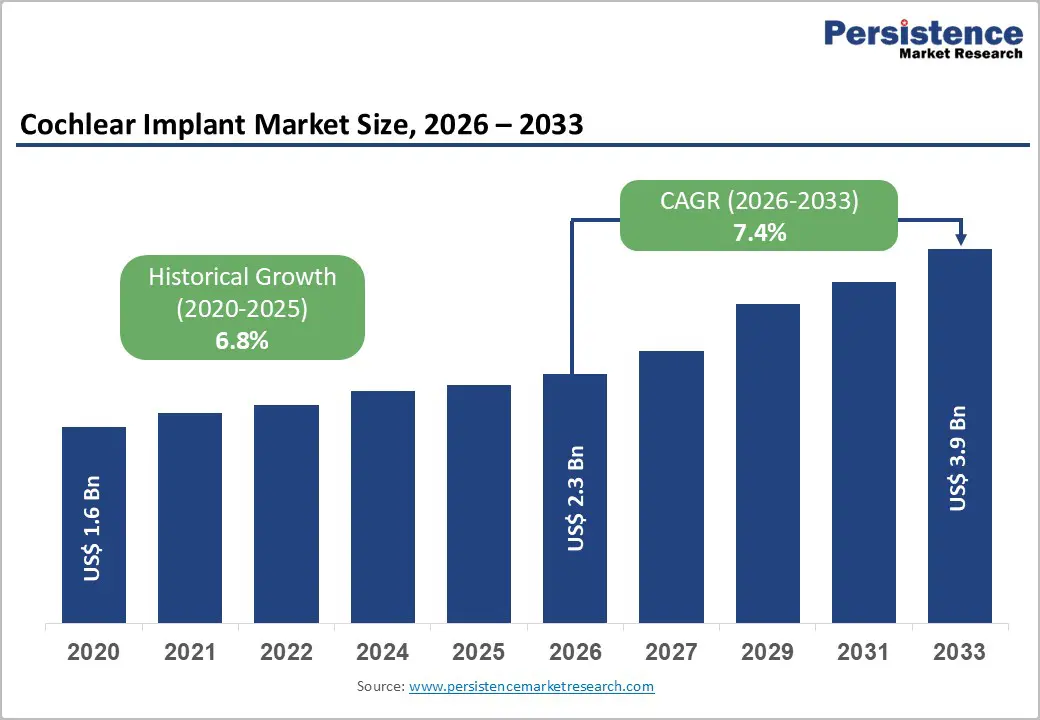
The global cochlear implant market is expected to reach a value of US$ 2.3 billion in 2026 and is projected to grow to approximately US$ 3.9 billion by 2033, expanding at a compound annual growth rate (CAGR) of 7.4% during the forecast period. The growth of the market is primarily driven by the increasing prevalence of severe hearing loss, rising awareness about hearing restoration options, and supportive reimbursement policies in several developed countries. Expanding indications for cochlear implantation and improvements in healthcare infrastructure are also contributing to the steady rise in implantation procedures globally.
Download Your Free Sample & Explore Key Insights: https://www.persistencemarketresearch.com/samples/36169
Market Drivers
One of the primary drivers of the cochlear implant market is the growing global prevalence of disabling hearing loss. According to estimates from international health organizations, hundreds of millions of people worldwide live with hearing impairment, and this number is expected to increase significantly in the coming decades. Aging populations are particularly vulnerable to hearing loss, making geriatric demographics a key factor supporting market growth. As life expectancy increases, the number of individuals requiring advanced hearing solutions is also expanding.
Technological advancements in cochlear implant systems are another major factor boosting market expansion. Innovations such as MRI-compatible implant devices, wireless connectivity, improved electrode arrays, and sophisticated signal processing algorithms have significantly enhanced patient outcomes. These developments enable better speech recognition, especially in noisy environments, and improve the overall listening experience. Additionally, the integration of tele-audiology services and remote programming capabilities allows clinicians to manage implant settings more efficiently while reducing the need for frequent hospital visits.
New regulatory approvals and expanded clinical indications are also contributing to market growth. Cochlear implants are now being approved for conditions such as single-sided deafness and asymmetric hearing loss, increasing the number of eligible patients. Early intervention initiatives, including newborn hearing screening programs, are further encouraging earlier diagnosis and treatment among infants and children.
Market Restraints
Despite the positive outlook, the cochlear implant market faces several challenges. The high cost associated with cochlear implant surgery and post-operative rehabilitation remains a significant barrier in many regions. The total treatment process includes the implant device, surgical procedure, hospital stay, programming sessions, and speech therapy, which collectively can cost tens of thousands of dollars. In many low- and middle-income countries, limited insurance coverage and healthcare funding restrict access to such advanced treatments.
Get Custom Insights Designed for Your Business: https://www.persistencemarketresearch.com/request-customization/36169
Market Opportunities
The expansion of bilateral cochlear implantation represents a major opportunity for the industry. While unilateral implants have historically been the standard treatment, bilateral implantation is gaining attention due to its ability to improve sound localization and speech understanding in noisy environments. This approach is particularly beneficial for pediatric patients as it supports language development and cognitive growth.
Emerging markets present another significant growth opportunity. Countries across Asia Pacific, Latin America, and the Middle East are investing in healthcare infrastructure and hearing health programs to address unmet medical needs. Government-funded initiatives aimed at providing cochlear implants to children and low-income patients are helping increase accessibility and procedure volumes.
Segment Insights
By product type, unilateral cochlear implants currently hold the largest share of the market. Their dominance is largely due to established clinical guidelines and reimbursement policies that prioritize first-ear implantation. Unilateral implants offer proven clinical benefits and remain the most widely adopted treatment option for severe hearing loss. However, bilateral implants are expected to witness the fastest growth, particularly among children.
In terms of age group, adults represent the largest patient segment. The increasing prevalence of age-related hearing loss and expanded eligibility criteria for adult implantation are major factors driving demand in this category. Pediatric patients also represent an important segment, especially as early hearing screening programs enable earlier diagnosis and treatment.
Regional Insights
North America currently leads the global cochlear implant market due to high healthcare spending, strong reimbursement frameworks, and well-established clinical networks. The region benefits from advanced medical technologies and strong adoption of innovative hearing restoration solutions.
Asia Pacific is expected to register the fastest growth over the forecast period. Rapid improvements in healthcare infrastructure, growing awareness about hearing loss treatments, and government-supported implant programs in countries such as China, India, and Japan are driving regional demand. Local manufacturing initiatives and partnerships with global companies are also helping reduce device costs and improve accessibility.
Checkout Now & Download Complete Market Report: https://www.persistencemarketresearch.com/checkout/36169
Competitive Landscape
The cochlear implant market is highly concentrated, with a few major manufacturers dominating global sales. Leading companies compete through technological innovation, product development, and strategic collaborations with healthcare institutions. Investments in research and development, surgeon training programs, and expansion into emerging markets remain key strategies for maintaining competitive advantage.
Market Segmentation
By Product
Unilateral implants
Bilateral implants
Hybrid implants
By Age Group
Pediatric
Adult
By End-user
Hospitals
ENT/specialty clinics
Ambulatory surgical centers
By Region
North America
Europe
East Asia
South Asia & Oceania
Latin America
Middle East & Africa
Read Related Reports:
Defibrillator Pads Market: Defibrillator pads market to grow from US$1.4 Bn in 2026 to US$2.6 Bn by 2033, driven by CVD prevalence and rising AED deployment worldwide demand.
Musculoskeletal Medicine Market: The musculoskeletal medicine market to grow from US$ 65.5 Bn in 2026 to US$ 89.2 Bn by 2033, registering a 4.5% CAGR driven by rising orthopedic demand.
Persistence Market Research
Persistence Market Research Pvt Ltd
+1 646-878-6329
email us here
Visit us on social media:
LinkedIn
Instagram
Facebook
YouTube
X
Legal Disclaimer:
EIN Presswire provides this news content "as is" without warranty of any kind. We do not accept any responsibility or liability for the accuracy, content, images, videos, licenses, completeness, legality, or reliability of the information contained in this article. If you have any complaints or copyright issues related to this article, kindly contact the author above.
